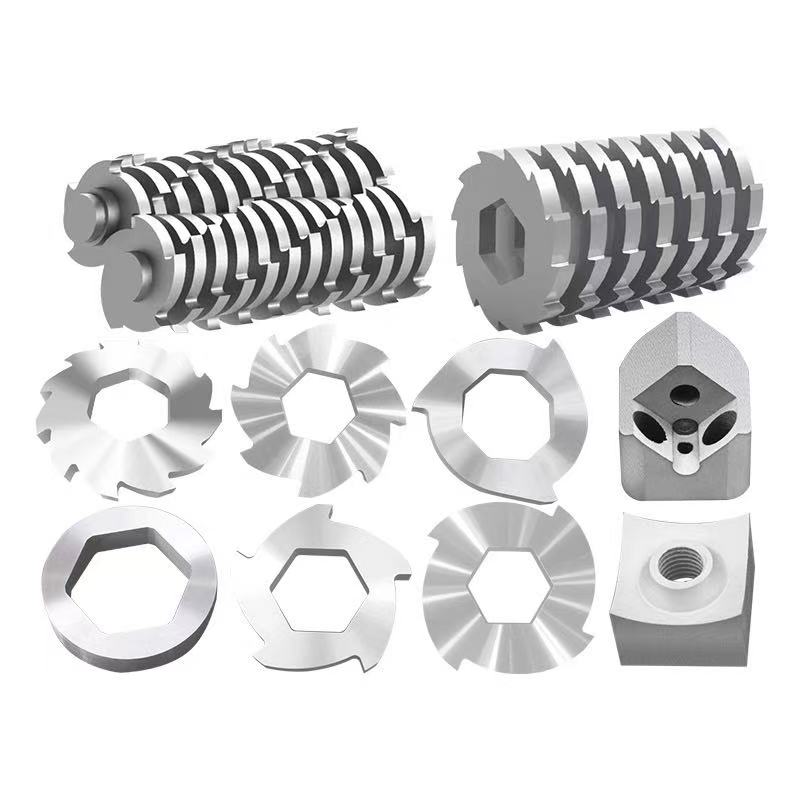
Many factories encounter blade breakage, and their first reaction is that the blade quality is poor. They directly replace it with a higher hardness material, but the phenomenon of blade breakage still occurs repeatedly. In fact, blade breakage is caused by multiple factors, and material is just one of them.
Firstly, equipment and assembly issues. Excessive clearance between tool holders, spindle jumping, and loose fixtures can cause continuous vibration during the cutting process, resulting in alternating impacts on the cutting edge. Even hard alloy blades are prone to minor chipping. Secondly, the blade geometry does not match. For thick materials and recycled materials containing impurities, using overly thin cutting edges results in insufficient impact resistance, making it easy to create gaps when encountering hard spots. Thirdly, the operating parameters are unreasonable. If the feed rate is too fast, the cutting load increases instantly, or if there is frequent alternation between hot and cold, thermal cracks may occur, gradually expanding and forming a broken edge. Fourthly, improper storage and handling of the blades can result in minor damage to the blade edge that is not visible to the naked eye, causing immediate failure upon installation.
To solve the problem of blade breakage, it is recommended to investigate in sequence: first verify the equipment jumping and clamping clearance, then check the blade angle and cutting parameters, and finally consider upgrading the blade material. Don't blindly pursue higher hardness, as high hardness often accompanies an increase in brittleness.