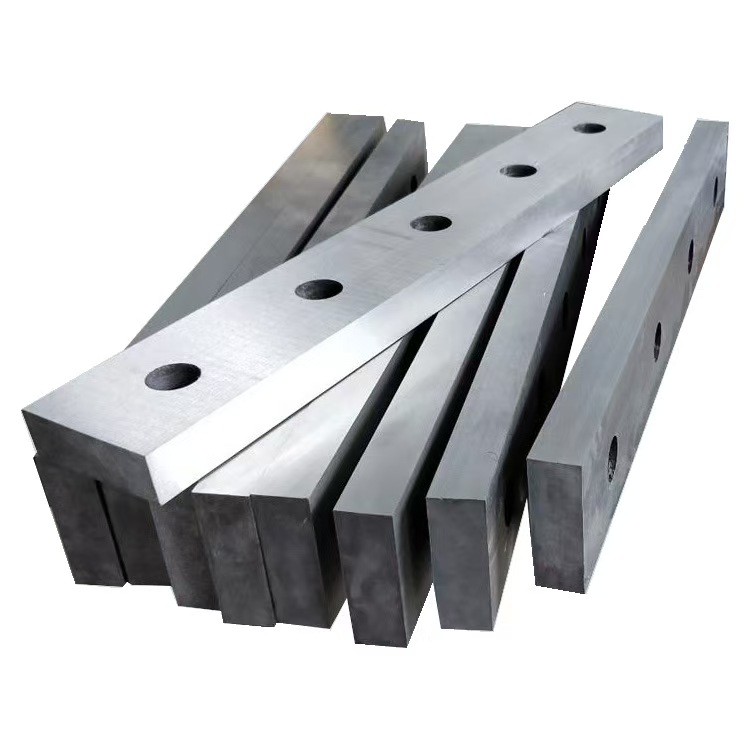
To determine whether the shredder blades need to be replaced, the core factors to consider are shredding efficiency, operational status, and blade wear level. Any of the following situations indicates that the blades are no longer functioning properly and need to be replaced promptly: First, observe the shredding efficiency: The most intuitive way to judge is based on the core function of the blades, which is to cut paper. Once they become blunt or damaged, the shredding efficiency will significantly deteriorate: the paper will be "torn" instead of "cut". A normally sharp blade will cut the paper into neat strips or shreds; if the blades become blunt, the paper will be "torn" or "ripped", with rough edges, irregular shapes, and even entire sections of paper that are not cut and are directly discharged from the paper outlet.
Uneven particle sizes in shredded paper, with large pieces remaining that exceed the originally set shredding size (such as 2×10mm) suddenly becoming larger, or a significant amount of unshredded large paper pieces mixed within the same batch of paper, indicate severe wear on the shredder blades, resulting in an increased bite gap and an inability to effectively cut.
When shredding paper continuously, occasional paper jams may be due to operational issues (such as feeding too much paper at once). However, if paper of the same thickness repeatedly jams during continuous shredding, and factors such as damp paper or malfunctioning paper feed slot of the machine have been ruled out, it is highly likely that the cutting blades have become blunt or broken, preventing the paper from being smoothly rolled into the shredder.
II. Listening to the operating status: Abnormal sound indicates blade issues. Changes in the sound when the shredder is operating can also reflect the state of the blades: If the noise suddenly increases during shredding, accompanied by an unusual "clunk" sound, it indicates that there may be a problem with the blades. The normal sound of shredding is a steady "buzzing" or shearing sound. If the blades have chipped teeth, bent edges, or if there is debris buildup on the blade shaft causing it to seize, there may be harsh friction and impact sounds during shredding, and even a noticeable "lagging" sensation. The motor load will increase significantly.
When the motor speed slows down, or even when there is a "dull stop" with a small amount of paper shredded (far below the machine's rated shredding capacity), the motor speed noticeably decreases, the machine body becomes severely heated, and even shuts down for protection, it indicates that the shear resistance increases due to worn blades, and the motor is overwhelmed. If the blades are not replaced in time under such circumstances, the motor may also be damaged.
III. Check the wear level of the blade: After dismantling the machine, make a direct judgment (suitable for users with practical skills). If the above two situations are not obvious, you can disassemble the shredder's blade head after powering off and inspect the blade directly: check the appearance of the blade teeth to see if the edges of the teeth are sharp and free of gaps; if there are broken teeth, bent edges, gaps, or the top of the blade teeth are worn into a "rounded shape", it indicates that the blade has been severely worn and cannot be repaired.
If the blade surface exhibits severe rusting and corrosion, and the rust has penetrated into the gaps between the teeth, it will affect the precision of the bite and requires replacement.
To assess the sharpness of the blade, gently touch the edge of the blade with your hand (be careful to avoid scratching). If you feel that the blade has become dull and slippery, lacking the sharp "cutting sensation", it indicates that the blade has lost its cutting ability and must be replaced.
Check the bite gap between the moving blade and the fixed blade of the shredder to ensure it is uniform and small; if the gap becomes larger, to the point where a thin piece of paper can be inserted, it indicates that the blade is worn or the installation is loose. Even if it is used reluctantly, the shredding effect will be extremely poor.
IV. Auxiliary judgment: Based on usage frequency and duration, there is a rough range for estimating the lifespan of blades in different usage scenarios, which can serve as a reference: For household/small office use (average daily shredding <50 sheets): carbon steel blades have a lifespan of about 1-2 years, and alloy steel blades have a lifespan of about 2-3 years; for medium-sized office use (average daily shredding 50-200 sheets): alloy steel blades have a lifespan of about 1-2 years, and high-speed steel blades have a lifespan of about 2-3 years; for large office/classified areas (average daily shredding >200 sheets, occasional shredding of cardboard/paper clips): high-speed steel or carbide-coated blades have a lifespan of about 1-2 years, and if hard objects (such as paper clips, CDs) are frequently shredded, the lifespan will be shortened to about half a year.